


Walk into a Canadian wellness clinic or scroll through extended health benefits, and you are likely to see acupuncture and Traditional Chinese Medicine (TCM) listed alongside physiotherapy and massage. That placement often surprises people. How does a practice developed thousands of years ago earn its seat next to modern biomedical care?
The answer is that TCM is not a single technique. It is a complete system of diagnosis and treatment that includes acupuncture, herbal medicine, manual therapies, movement practices, and nutrition. Its methods are still used because they consistently address problems that matter to people: pain that doesn’t respond well to pills, stress that keeps sleep away, or chronic issues that linger despite tests coming back “normal.”
For patients, this means practical options that fit into everyday healthcare decisions. For students considering a career, it means stepping into a regulated profession that is growing steadily in Canada, with structured education, licensing exams, and a defined role in an evolving healthcare system.
What Is Acupuncture?
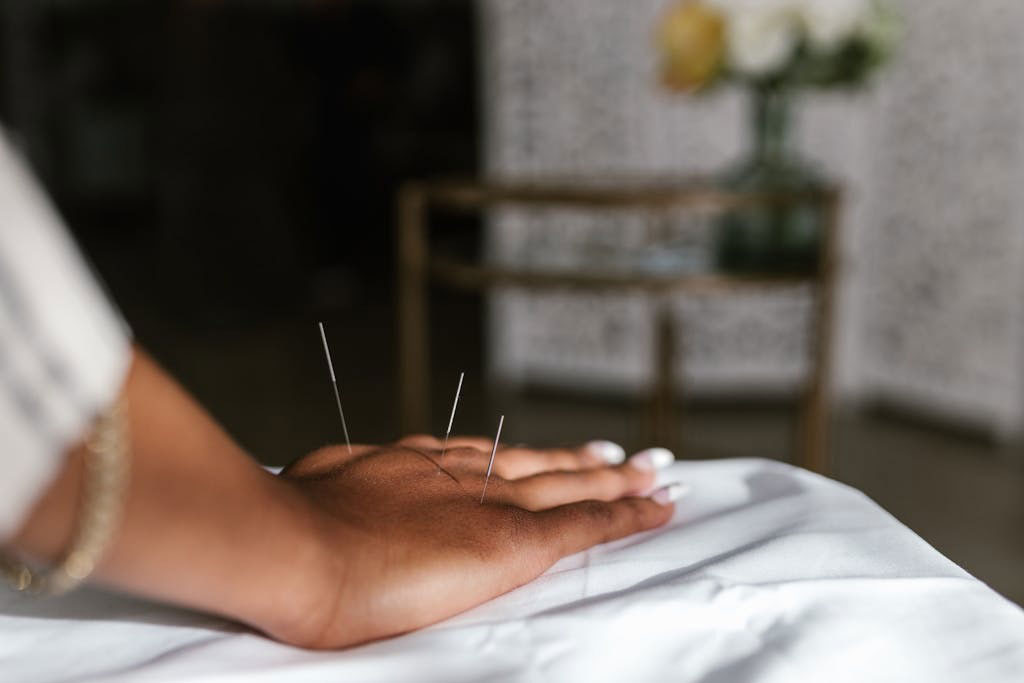
Acupuncture is a clinical modality within TCM that uses thin, sterile needles inserted into specific points to influence physiology and symptom patterns. Classical TCM language describes patterns of Qi and blood flowing through meridians.
Modern clinical practice blends that language with a neurophysiological model: needling stimulates peripheral nerves, modulates pain signalling, and triggers local tissue responses that can affect circulation and inflammation. That blend lets practitioners speak both the language of syndromes and the language of anatomy.
How Acupuncture Works From a Biomedical View
While acupuncture originates from traditional Chinese medicine, modern research demonstrates that it also produces clear, measurable effects in the body. Here are some of the main ways it works:
- Nerve stimulation: When a thin, sterile needle is placed in the skin or muscle, it activates sensory nerves. These signals travel to the spinal cord and brain, where they can help “turn down” the volume of pain.
- Release of natural chemicals: Acupuncture triggers the body to release substances like endorphins (natural painkillers) and serotonin (a mood regulator). These chemicals support both pain relief and overall well-being.
- Improved circulation: Needling can increase local blood flow, which supports healing in injured or tense tissues.
- Adaptable treatment: Practitioners choose different points, vary the depth of insertion, and sometimes gently stimulate the needles depending on the condition being treated.
- Combined effects: Acupuncture is often used in conjunction with other TCM approaches, such as cupping or herbal formulas, to create a broader treatment effect.
Conditions Commonly Treated With Acupuncture
Modern clinical practice often focuses on conditions where acupuncture has the strongest research support. These include both chronic pain and certain functional disorders.
- Chronic musculoskeletal pain: Acupuncture is frequently used for low back pain, neck pain, and shoulder pain.
- Osteoarthritis: Many patients seek treatment for joint pain and stiffness, especially in the knees and hips.
- Headaches: Both tension-type and migraine headaches show positive responses in clinical trials.
- Cancer care support: Acupuncture can help alleviate nausea and vomiting associated with chemotherapy.
- Postoperative recovery: Some hospitals incorporate acupuncture to alleviate post-surgical pain and expedite healing.
The largest individual patient data meta-analysis, led by Vickers and colleagues, concluded that acupuncture is effective for chronic pain, including back and neck pain, osteoarthritis, shoulder pain, and chronic headache.
Example Of Acupuncture Diagnosis
Consider a patient who reports chronic low back pain that flares in cold weather and feels better with gentle movement. They also mention fatigue and occasional stiffness in the knees.
During the exam:
- The pain traces along the Bladder meridian on the lower back and legs.
- The tongue appears pale with a thin white coating.
- The pulse feels deep and weak in the Kidney position.
From an acupuncture and TCM perspective, this presentation could be classified as a Kidney Yang deficiency with cold stagnation. Rather than treating back pain as an isolated complaint, the practitioner links it to a broader pattern involving energy and circulation.
The treatment plan may include:
- Needle placement on points along the Bladder meridian and supporting Kidney points.
- Moxibustion to provide warmth and improve circulation in the lower back.
- Lifestyle guidance, such as keeping the lower back warm and avoiding prolonged damp or cold exposure.
This approach aligns specific symptoms with underlying imbalances, creating a treatment strategy that goes beyond symptom management.
What Is Traditional Chinese Medicine?
Traditional Chinese Medicine (TCM) is a complete clinical system that combines observation, diagnosis, and multiple therapies into a unified approach to health. It uses its own concepts like Qi, yin and yang, and meridians to describe how the body functions. In practice, these ideas translate into concrete treatment plans that may include acupuncture, herbal formulas, manual therapies, movement practices, and dietary guidance.
This shared framework allows practitioners to address complex and chronic problems that are often difficult to treat with a single therapy alone.
Core Diagnostic Tools
Diagnosis in TCM begins with careful observation. Practitioners:
- Examine the tongue for shape, coating, and color.
- Palpate the pulse at multiple positions on each wrist.
- Gather detailed histories about symptoms, sleep, digestion, and emotional state.
All of these inputs feed into pattern differentiation. This is the process of asking: What underlying imbalance explains this set of symptoms? The identified pattern then determines whether treatment centers on acupuncture, herbs, dietary adjustments, or a combination.
Example Of Pattern-Based Diagnosis
Consider a patient who:
- Wakes at 3 a.m. and cannot fall back asleep.
- Reports a bitter taste in the mouth in the morning.
- Occasionally experiences heart palpitations.
From a TCM perspective, this symptom cluster could be classified as liver fire or heart yin deficiency. Instead of simply labeling it “insomnia,” the practitioner uses the pattern to guide point selection, herbal formulas, and dietary recommendations.
Modalities Within TCM
A complete TCM practice draws from several key modalities:
- Herbal Medicine: Multi-ingredient formulas matched to the patient’s pattern.
- Moxibustion: The application of heat to specific points to support circulation and treat “cold” or deficient states.
- Cupping and Gua Sha: Local surface techniques that improve blood flow, ease muscle tightness, and reduce pain.
- Tui Na (Medical Massage): Manual therapy often applied for musculoskeletal complaints.
- Qi Gong and Movement: Therapeutic exercises that regulate energy and support recovery.
- Dietary Therapy: Food-based guidance tailored to the individual’s constitution and the season.
Why This Matters For Students
For future practitioners, the value of TCM lies in its plurality of tools. A comprehensive education is not just about memorizing acupuncture point locations. It includes training in diagnosis, safety, herbal pharmacology, and clinical reasoning, so that graduates can integrate the right therapy at the right time for each patient.
Growing Demand for Acupuncture and Traditional Chinese Medicine
Around the world, interest in acupuncture and Traditional Chinese Medicine is steadily increasing. The World Health Organization has documented how traditional and complementary therapies are being incorporated into national health policies, and research output continues to rise. Clinics, hospitals, and even oncology programs now recognize acupuncture’s role in supporting patients with pain, stress, and recovery. This isn’t a niche trend anymore. It is part of a larger shift toward holistic medicine in Canada and worldwide.
In Canada, this shift is supported by regulation. Provinces such as Ontario and British Columbia have created professional colleges that define education standards and protect professional titles. For patients, this means safety and accountability. For practitioners, it means being part of a regulated health profession.
Labour market reports consistently show steady demand for careers in acupuncture, making the path both clinically meaningful and professionally viable. Completing a recognized acupuncture diploma in Canada is the essential first step, since only registered practitioners can access the full career opportunities that come with regulation.
Careers in Acupuncture and Traditional Chinese Medicine
When students consider studying acupuncture, the first questions are usually practical:
- Will I be employable?
- Where do practitioners work?
- Can I make a living?
The answer depends on your goals, your province, and the program you choose, but the overall picture is encouraging. Careers in acupuncture span private practice, integrative care, community health, and even research. Patient demand is growing, insurance coverage is strong, and regulation has made the profession credible in the eyes of both the public and other healthcare providers.
Common career settings include:
- Private practice: Many graduates establish their own clinics or share space with other health professionals. This offers autonomy and flexible schedules.
- Multidisciplinary clinics: Collaboration with physiotherapists, chiropractors, or massage therapists is common, especially for pain and rehabilitation.
- Community models: Group acupuncture sessions make care affordable and expand access.
- Hospitals and integrative care centers: While less widespread in Canada, registered acupuncturists are increasingly invited into oncology and pain management programs.
- Education and research: With experience, some practitioners go on to teach or contribute to clinical studies as the evidence base for acupuncture benefits continues to grow.
Why The Right School Matters
Not every training program sets students up for success. Graduates of unaccredited or short courses often find themselves blocked: unable to register with provincial colleges, excluded from insurance reimbursement, or ineligible for licensing exams. For anyone serious about a healthcare career, program choice is critical.
At CCATCM, the Chinese medicine education structure is aligned with the Pan-Canadian Exam requirements, ensuring graduates can apply for registration in regulated provinces. Students receive supervised clinical training in on-site teaching clinics, gaining experience across a wide range of conditions. Financial aid and student loans are available, making education accessible. Alumni consistently report strong pass rates on licensing exams, a reflection of rigorous preparation and program credibility.
A Balanced Career in Modern Healthcare
Acupuncture and TCM offer more than symptom relief. They represent a growing healthcare profession with a regulated framework, strong patient demand, and diverse career settings. For patients, they provide safe, effective options for managing pain, stress, and chronic conditions. For students and career changers, they offer a pathway into healthcare that balances independence with professional credibility.
Choosing the right program is the most important step. A diploma from CCATCM prepares graduates not only for licensing exams but also for the realities of practice, diagnosis, safety, patient care, and collaboration. Healthcare needs practitioners who can bridge traditional knowledge and modern clinical practice. With the right preparation, that practitioner can be you.

